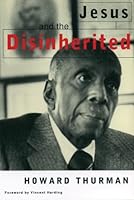
It is a privilege, after so long a time, to set down what seems to me to be an essentially creative and prognostic interpretation of Jesus as religious subject rather than religious object.
‘I want freedom from Japan.’” It was this kind of atmosphere that characterized the life of the Jewish community when Jesus was a youth in Palestine. The urgent question was what must be the attitude toward Rome. Was any attitude possible that would be morally tolerable and at the same time preserve a basic self-esteem—without which life could not possibly have any meaning? The question was not academic. It was the most crucial of questions. In essence, Rome was the enemy; Rome symbolized total frustration; Rome was the great barrier to peace of mind.
Thus he asked his people to learn from him, “For I am meek and lowly in heart; and ye shall find rest unto your souls. For my yoke is easy, and my burden is light.”3 It was but natural that such a position would be deeply resented by many of his fellows, who were suffering even as he was. To them it was a complete betrayal to the enemy. It was to them a counsel of acquiescence, if not of despair, full to overflowing with a kind of groveling and stark cowardice. Besides, it seemed like self-deception, like whistling in the dark. All of this would have been quite true if Jesus had stopped there. He did not. He recognized with authentic realism that anyone who permits another to determine the quality of his inner life gives into the hands of the other the keys to his destiny. If a man knows precisely what he can do to you or what epithet he can hurl against you in order to make you lose your temper, your equilibrium, then he can always keep you under subjection.
The basic fact is that Christianity as it was born in the mind of this Jewish teacher and thinker appears as a technique of survival for the oppressed. That it became, through the intervening years, a religion of the powerful and the dominant, used sometimes as an instrument of oppression, must not tempt us into believing that it was thus in the mind and life of Jesus. “In him was life; and the life was the light of men.” Wherever his spirit appears, the oppressed gather fresh courage; for he announced the good news that fear, hypocrisy, and hatred, the three hounds of hell that track the trail of the disinherited, need have no dominion over them.
Thus the Negro feels that he must be prepared, at a moment’s notice, to protect his own life and take the consequence therefor. Such a predicament has made it natural for some of them to use weapons as a defense and to have recourse to premeditated or precipitate violence. Living in a climate of deep insecurity, Jesus, faced with so narrow a margin of civil guarantees, had to find some other basis upon which to establish a sense of well-being. He knew that the goals of religion as he understood them could never be worked out within the then-established order.
Fear, then, becomes the safety device with which the oppressed surround themselves in order to give some measure of protection from complete nervous collapse. How do they achieve this? In the first place, they make their bodies commit to memory ways of behaving that will tend to reduce their exposure to violence.
The Jewish community has long been acquainted with segregation and the persecution growing out of it. Jews have been all the more easily trapped by it because of the deep historical conviction that they are a chosen people. This conviction and its underscoring in the unique ethical insights of the prophets have tended to make all those who were not a part of Israel feel in some sense as if they were spiritual outcasts. The conscious and unconscious reaction inspired by this sense of being on the outside is a fertile seedbed for anti-Semitism. Anti-Semitism is a confession of a deep sense of inferiority and moral insecurity. It is the fear of the socially or politically strong in the presence of the threat of moral judgment implicit in the role of the Jewish community throughout human history. Jesus was intimately acquainted with this problem from the inside. Jesus knew all of this. His days were nurtured in great hostilities Focused upon his kind, the sons of Israel. There was no moment in all his years When he was free.2 It is instructive to inquire into the effects of fear on the disadvantaged. Fear becomes acute, in the form of panic or rage, only at the moment when what has been threat becomes actual violence; but the mere anticipation of such an encounter is overwhelming simply because the odds are basically uneven. This fact is important to hold in mind. The disadvantaged man knows that in any conflict he must deal not only with the particular individual involved but also with the entire group, then or later. Even recourse to the arbitration of law tends to be avoided because of the fear that the interpretations of law will be biased on the side of the dominant group. The result is the dodging of all encounters. The
It is clear, then, that this fear, which served originally as a safety device, a kind of protective mechanism for the weak, finally becomes death for the self. The power that saves turns executioner. Within the walls of separateness death keeps watch. There are some who defer this death by yielding all claim to personal significance beyond the little world in which they live. In the absence of all hope ambition dies, and the very self is weakened, corroded. There remains only the elemental will to live and to accept life on the terms that are available. There is a profound measure of resourcefulness in all life, a resourcefulness that is guaranteed by the underlying aliveness of life itself.
Take therefore no thought for the morrow: for the morrow shall take thought for the things of itself. Sufficient unto the day is the evil thereof. The core of the analysis of Jesus is that man is a child of God, the God of life that sustains all of nature and guarantees all the intricacies of the life-process itself. Jesus suggests that it is quite unreasonable to assume that God, whose creative activity is expressed even in such details as the hairs of a man’s head, would exclude from his concern the life, the vital spirit, of the man himself. This idea—that God is mindful of the individual—is of tremendous import in dealing with fear as a disease. In this world the socially disadvantaged man is constantly given a negative answer to the most important personal questions upon which mental health depends: “Who am I? What am I?”
youth. The youth had lost their sense of belonging. They did not count; there was no center of hope for their marginal egos. According to my friend, Hitler told them: “No one loves you—I love you; no one will give you work—I will give you work; no one wants you—I want you.” And when they saw the sunlight in his eyes, they dropped their tools and followed him. He stabilized the ego of the German youth, and put it within their power to overcome their sense of inferiority. It is true that in the hands of a man like Hitler, power is exploited and turned to ends which make for havoc and misery; but this should not cause us to ignore the basic soundness of the theory upon which he operated.
Even though a man is convinced of his infinite worth as a child of God, this may not in itself give him the opportunity for self-realization and fulfillment that his spirit demands. Even though he may no longer feel himself threatened by violence, the fact remains that for him doors often are closed. There are vocational opportunities that are denied him. It is obvious that the individual must reckon with the external facts of his environment, especially those that constrict his freedom.
There is something more to be said about the inner equipment growing out of the great affirmation of Jesus that a man is a child of God. If a man’s ego has been stabilized, resulting in a sure grounding of his sense of personal worth and dignity, then he is in a position to appraise his own intrinsic powers, gifts, talents, and abilities. He no longer views his equipment through the darkened lenses of those who are largely responsible for his social predicament. He can think of himself with some measure of detachment from the shackles of his immediate world. If he equips himself in terms of training in this mood, his real ability is brought into play. The fact that he is denied opportunity will not necessarily deter him. He will postpone defeat until defeat itself closes in upon him. The interesting fact is that defeat may not close in upon him. Curious indeed is the notion that plays hide-and-seek with human life: “I may be an exception.” A large measure of illusion and self-deception is implicit in this notion, but again and again it has come to the rescue of desperate people forced to take desperate chances.
But the child of the disinherited is likely to live a heavy life. A ceiling is placed on his dreaming by the counsel of despair coming from his elders, whom experience has taught to expect little and to hope for less. If, on the other hand, the elders understand in their own experiences and lives the tremendous insight of Jesus, it is possible for them to share their enthusiasm with their children.
survive. It is true that a man cannot be serene unless he possesses something about which to be serene. Here we reach the high-water mark of prophetic religion, and it is of the essence of the religion of Jesus of Nazareth. Of course God cares for the grass of the field, which lives a day and is no more, or the sparrow that falls unnoticed by the wayside. He also holds the stars in their appointed places, leaves his mark in every living thing. And he cares for me! To be assured of this becomes the answer to the threat of violence—yea, to violence itself. To the degree to which a man knows this, he is unconquerable from within and without.
from an argument about survival and about religion having no place, to the argument about thriving in the security despite the threat of violence. And it is aligned with wonderChristianity has been almost sentimental in its effort to deal with hatred in human life. It has sought to get rid of hatred by preachments, by moralizing, by platitudinous judgments. It has hesitated to analyze the basis of hatred and to evaluate it in terms of its possible significance in the lives of the people possessed by it.
night, when the lights were out and you were safely tucked away in bed, you reached down into the quiet places of your little heart and lifted out your bundle of hates and resentments growing out of the family situation, and you fingered them gently, one by one. In the darkness you muttered to yourself, “They can keep me from talking about it to them, but they can’t keep me from resenting it. I hate them for what they are doing to me. No one can prevent me there.” Hatred becomes for you a source of validation for your personality. As you consider the family and their attitude toward you, your hatred gives you a sense of significance which you fling defiantly into the teeth of their estimate of you.
It is this kind of attitude that is developed in the mind and soul of the weak and the disinherited. As they look out upon their world, they recognize at once that they are the victims of a systematic denial of the rights and privileges that are theirs, by virtue both of their being human and of their citizenship.
If they accept this judgment, then the grounds of their self-estimate is destroyed, and their acquiescence becomes an endorsement of the judgment of the environment. Because they are despised, they despise themselves. If they reject the judgment, hatred may serve as a device for rebuilding, step by perilous step, the foundation for individual significance; so that from within the intensity of their necessity they declare their right to exist, despite the judgment of the environment.
upon. A strange, new cunning possesses the mind, and every opportunity for taking advantage, for defeating the enemy, is revealed in clear perspective. One of the salient ways by which this expresses itself is the quality of endurance that appears. It is the sort of thing that causes a little boy, when he is being overpowered by a big boy, to refrain from tears or from giving any expression that will reveal the depths of his pain and hurt. He says to himself grimly, “I’ll die before I cry.”
When hatred serves as a dimension of self-realization, the illusion of righteousness is easy to create. Often
The most effective way by which this transformation can be brought about is through discipline in hatred; for if they hate the enemy, then that hatred will immunize them from a loss of moral self-respect as they do to the enemy what is demanded of them in the successful prosecution of the war. To use a figure, a curtain was dropped in front of their moral values and their ethical integrity as human beings and Americans, and they moved around in front of that curtain to do their death-dealing work on other human beings. The curtain of protection was the disciplined hatred. A simple illustration of what I mean is this: There are some people who cannot tell you face to face precisely what they think of you unless they get angry first. Anger
fellows. It blinds the individual to all values of worth, even as they apply to himself and to his fellows. Hatred bears deadly and bitter fruit. It is blind and nondiscriminating. True, it begins by exercising specific discrimination. This it does by centering upon the persons responsible for the situations which create the reaction of resentment, bitterness, and hatred. But once hatred is released, it cannot be confined to the offenders alone.
If he had regarded himself as one who was starting a new religion, a new faith, then it would not have been hard to account for bitter opposition. With justice, the defenders of the faith could have opposed him because he would have been deliberately trying to destroy the very grounds of Judaism. But if it be true—as I think it is—that Jesus felt he was merely serving as a creative vehicle for the authentic genius of Israel, completely devoted to the will of God, then in order to love those of the household he must conquer his own pride. In their attitude he seemed to see the profoundest betrayal of the purpose of God. It is curious that as each looked on the other the accusations were identical.
The woman broke into his retreat with an urgent request in behalf of her child. Jesus said to her, “It is not meet to take the children’s bread, and cast it to dogs.” This was more a probing query than an affirmation. It had in it all the deep frustration which he had experienced, and there flashed through it generations of religious exclusiveness to which he was heir. “What right has this woman of another race to make a claim upon me? What mockery is there here? Am I not humiliated enough in being misunderstood by my own kind? And here this woman dares to demand that which, in the very nature of the case, she cannot claim as her due.” Into the riotous thoughts that were surging in his mind her voice struck like a bolt of lightning: “Truth, Lord: yet the dogs eat of the crumbs which fall from their masters’ table.” “Go—go, woman, go in peace; your faith hath saved you.”
Jesus’s encounter with the Canaanite woman is instructive precisely because he had to lay down even his sense of mission — the work he was pulling together for the “genius of Israel” — despite his exhaustion. The woman’s faith broke through his frustration, and his response acknowledged that the claim of need transcends the boundaries of exclusivity. Recognition of another’s dignity required him to surrender the very humility that defined his work.When one analyzes the preaching and the religious teachings in the churches of his country, he discovers that the term “enemy” usually has this rather restricted meaning. When the Negro accepts the teaching of love, it is this narrow interpretation which is uppermost. I grew up with this interpretation. I dare to say that, in the white churches in my little town, the youths were trained in the same narrow interpretation applied to white persons. Love those who have a natural claim upon you. To those who have no such claim, there is no responsibility.
Thurman’s analysis reveals that “enemy” in American church teaching was narrowly interpreted: love those with a natural claim on you (family, neighbors, fellow believers), but feel no responsibility toward outsiders. This restricted interpretation made Jesus’s command to “love your enemies” manageable — but also toothless. The radical edge of the teaching was dulled because the real enemies — those who actively oppressed or betrayed — were excluded from the category of people worth loving.The situation was all the more difficult to bear because the tax collectors tended to be prosperous in contrast with the rest of the people. To be required to love such a person was the final insult. How could such a demand be made? One did not even associate with such creatures. To be seen in their company meant a complete loss of status and respect in the community. The taxgatherer had no soul; he had long since lost it. When Jesus became a friend to the tax collectors and secured one as his intimate companion, it was a spiritual triumph of such staggering proportions that after nineteen hundred years it defies rational explanation.
There is no simple or single answer. In every ghetto, in every dwelling place of the disinherited throughout the ages, these persons have appeared. To love them means to recognize some deep respect and reverence for their persons. But to love them does not mean to condone their way of life. Jesus demonstrated that the only way to redeem them for the common cause was to penetrate their thick resistance to public opinion and esteem and lay bare the simple heart. This man is not just a tax collector; he is a son of God. Awaken that awareness in him and he will attack his betrayal as only he can—from the inside. It was out of this struggle and triumph that Jesus says: “Love your enemies, do good to them which hate you.” Hence he called Matthew, the tax collector, to follow him.