…we want to use the web for very particular purposes.
Such as facilitating genuine human connections, pursuing collective sense-making and building knowledge together, and ideally grounding our knowledge of the world in reality.
So, if you don’t care about these things, don’t worry about generative AI! Everything will be fine!
We’re about to have much more engaging content on social media. TikTok will be lit.
However, I’m quite keen on these outcomes; I write on the web a lot, I’m a big proponent of people publishing personal knowledge online, and I encourage everyone to do it.
I keep banging on about digital gardening which is essentially having your own personal wiki on the web.
…we want to use the web for very particular purposes.
Such as facilitating genuine human connections, pursuing collective sense-making and building knowledge together, and ideally grounding our knowledge of the world in reality.
So, if you don’t care about these things, don’t worry about generative AI! Everything will be fine!
We’re about to have much more engaging content on social media. TikTok will be lit.
However, I’m quite keen on these outcomes; I write on the web a lot, I’m a big proponent of people publishing personal knowledge online, and I encourage everyone to do it.
I keep banging on about digital gardening which is essentially having your own personal wiki on the web. First, generated content is different because it has a different relationship to reality than us.
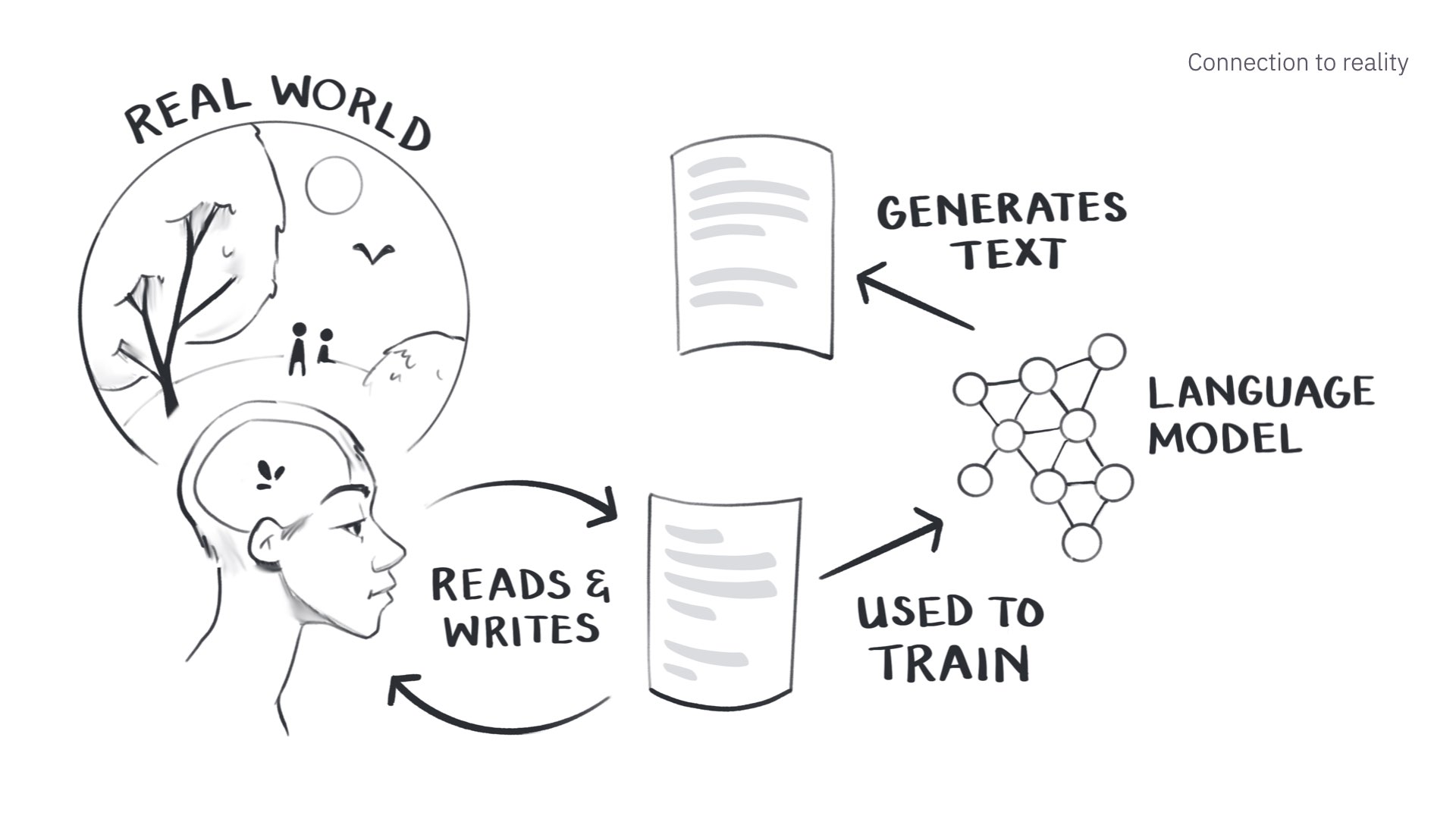 We are embodied humans in a shared reality filled with rich embodied sensory information.
When we read, we compare other people’s accounts of reality against our own experiences. We question whether their views align with ours. And then we write our own accounts.
In doing this, we are all participating in this beautiful cycle of trying to make sense of everything together. This is the core of all science, art, and literature. We are trying to understand and teach each other things through writing.
We are embodied humans in a shared reality filled with rich embodied sensory information.
When we read, we compare other people’s accounts of reality against our own experiences. We question whether their views align with ours. And then we write our own accounts.
In doing this, we are all participating in this beautiful cycle of trying to make sense of everything together. This is the core of all science, art, and literature. We are trying to understand and teach each other things through writing.Lastly, generated content lacks any potential for human relationships. When you read someone else’s writing online, it’s an invitation to connect with them. You can reply to their work, direct message them, meet for coffee or a drink, and ideally become friends or intellectual sparring partners. I’ve had this happen with so many people. Highly recommend. There is always someone on the other side of the work who you can have a full human relationship with.
The claim that generated content lacks relationship potential assumes that AI cannot ground its knowledge in embodied reality. But the boundary isn’t as clean as it appears — if an AI system could credibly point to sources, cite lived experiences of its training data contributors, or facilitate connections between readers and the humans behind the corpus, the relationship layer might persist in a different form. The question is whether grounding requires direct authorship or just traceable provenance.