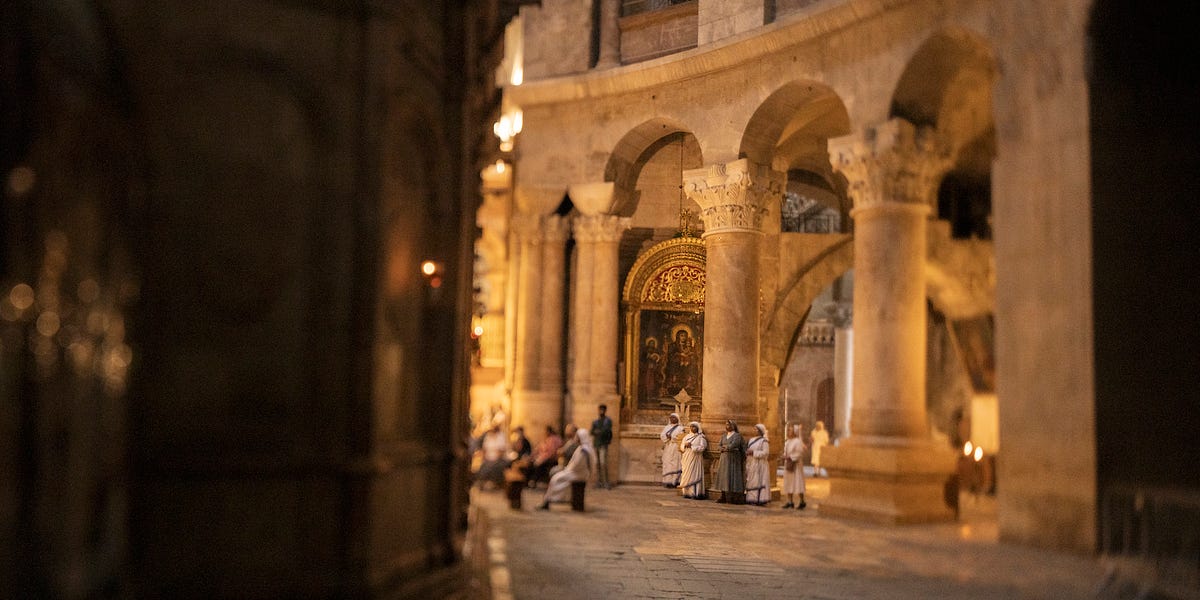
Christian Gonzalez Ho: One of the first things that I thought about when designing the gallery space was how people generally interact with photography in a consumeristic way. We are flooded with images all the time, and we forget that the act of looking at media or engaging with any type of film, photography, music, etc., is a longing for pilgrimage—it’s an engagement we undertake while desiring to go to another place. So the whole theme of pilgrimage struck me as very contemporary. Now, you know, our technologies are so closely fit to our bodies and our consciousness that we don’t realize they’re taking us on journeys.
KD: I mean, I wrestled with this after the trip—how can you even try and compare an exhibition space with these sites, which are some of the best examples of human creativity ever made? We cannot recreate them, of course, but what we can do is to try and give a glimpse of the beauty of the experience of being in these places.
I’m thinking about the ways in which people who were accustomed to, say, one service a week, had this basic practice disrupted by the pandemic. Options like commuter churches, Zoom services, and sermon podcasts give us the option of a disembodied relationship with our communities.
So this show is not an attempt to reproduce pilgrimage sites as if you’re there—its structures are created with two by fours. They’re very crude material. For people who are beginning to explore the history of pilgrimage, I think of this show as an invitation. The gallery, the images, the act of building are urging us on pilgrimages toward Christ. They are crude attempts to approximate the glory.
. The building wasn’t a puzzle to be solved, a “da Vinci code” with a puzzle we had to unfurl. It was there, speaking to people something that the church once understood and that we’ve forgotten. These images are attempts to show all these incredible things that have been given to us through the centuries to weigh and understand.
For example, there is a complicated relationship between evangelicalism and the idea of returning to a divinely appointed city, or a divinely ordained government.
KD: I can’t believe I’ve not mentioned it before, but Augustine’s City of God was really fundamental to this. We thought about the two cities—the city of man and the city of God, and how we were seeing glimpses of the city of God in the city of man. Augustine calls the city of man the “pilgrim city,” in which we can see the city of God beginning to descend. City of God was written in a time where Rome was being destroyed. The city was being razed. So you look at these pilgrimage sites and think, well, this is a reminder to Christians of the temporary nature of the earth. We are trying to build cities and empires and political allegiances. We should be reminded that it is a pilgrim city we are traveling through. Kingdoms rise and fall, and that, I suppose, would speak to Christians who try and pin their hope on some political empire that will solve all things. And there are political solutions to some things, of course, but I think it is very interesting that the Christian faith arose and was scattered across the world. Through this scattering is one way we see the New Jerusalem, intentionally moving across the earth.
Now that we’re considering the end goals of pilgrimage, I want to ask—how do you want this exhibit, which largely focuses on the past, to shape how people imagine the church of tomorrow?
There’s always a horizon of unseen or even invisible things around my present vision. I think this exhibit is not about telling people to build another church, but it’s about Christians seeing these sites and recognizing what we believe. We are not here to create derivative images of what’s popular or beautiful in a particular moment. It’s about the knowledge of this real place, this New Jerusalem, and building frameworks that invite people to experience that reality.