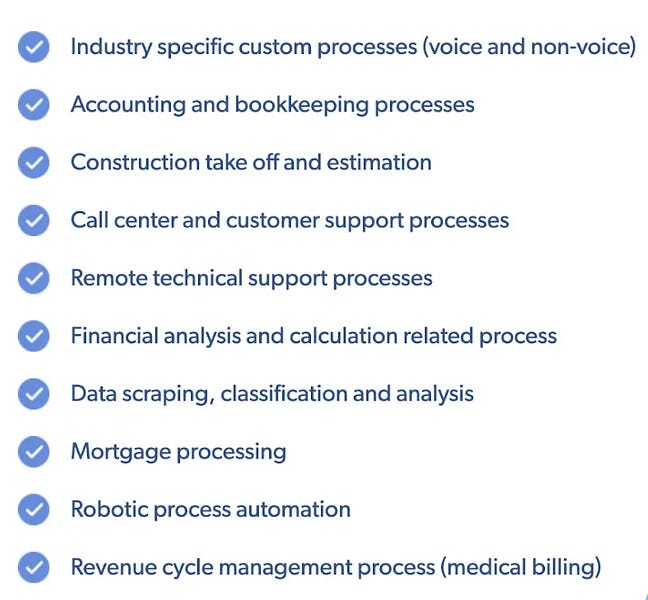
LLMs create an opportunity for startups to look beyond this way of thinking and discover surface area that previously was out of bounds for selling software given the required GTM and pricing limitations of software
The historical arc: selling labor → selling software (which automated labor) → selling AI-automated labor (which may replace selling software). Each transition changes what gets priced and how value is captured.Selling work opens up new vertical opportunities that wouldn’t have otherwise supported a software company
Software economics depend on usage metrics — VCs invest based on engagement indicators that suggest category dominance. Selling work (AI-automated labor) shifts the value capture model away from usage and toward outcomes. This opens verticals where software adoption would have been too shallow to justify venture scale.An AI-driven product with the consistency and SLAs it can achieve should be vastly superior to an outsourced offering – a 10x and cheaper opportunity
the people in the firm benefit from being able to shift their time to less mechanical things like client services, getting more customers, or of course the finishing touches on the demand package.
When AI handles the mechanical work, the freed human capacity can shift toward personal care — attending to people rather than optimizing for the business. The default assumption is that efficiency gains get reinvested into growth, but the more interesting possibility is redirecting that time toward human attention.